

Flexibility at Work – A New Standard: Lessons for Modern Businesses
- Why Flexibility is Redefining Work
- The Benefits of Flexibility: Why It Works
- Challenges of Flexibility: Where It Gets Complicated
- Lessons from Flexibility Leaders
- Strategies for Implementing Flexibility
- Expert Opinion
- Conclusion: Flexibility as a Growth Strategy
Why Flexibility is Redefining Work
For decades, work has been synonymous with fixed hours and physical office spaces. Today, this paradigm is shifting rapidly. Technology, social changes, and global crises like the pandemic have fundamentally transformed how we perceive and structure work. But flexibility is more than just a convenience—it’s a complex system that requires strategic planning, a culture of trust, and new metrics for success.
The data speaks volumes: according to Gartner, 84% of companies intend to maintain hybrid work models. At the same time, 41% face challenges, such as employee resistance and a lack of management tools. This article dives deep into lessons from industry leaders, offering insights to help businesses not just adopt flexibility, but turn it into a competitive advantage.
The Benefits of Flexibility: Why It Works
1. Boosting Productivity Through Adaptation
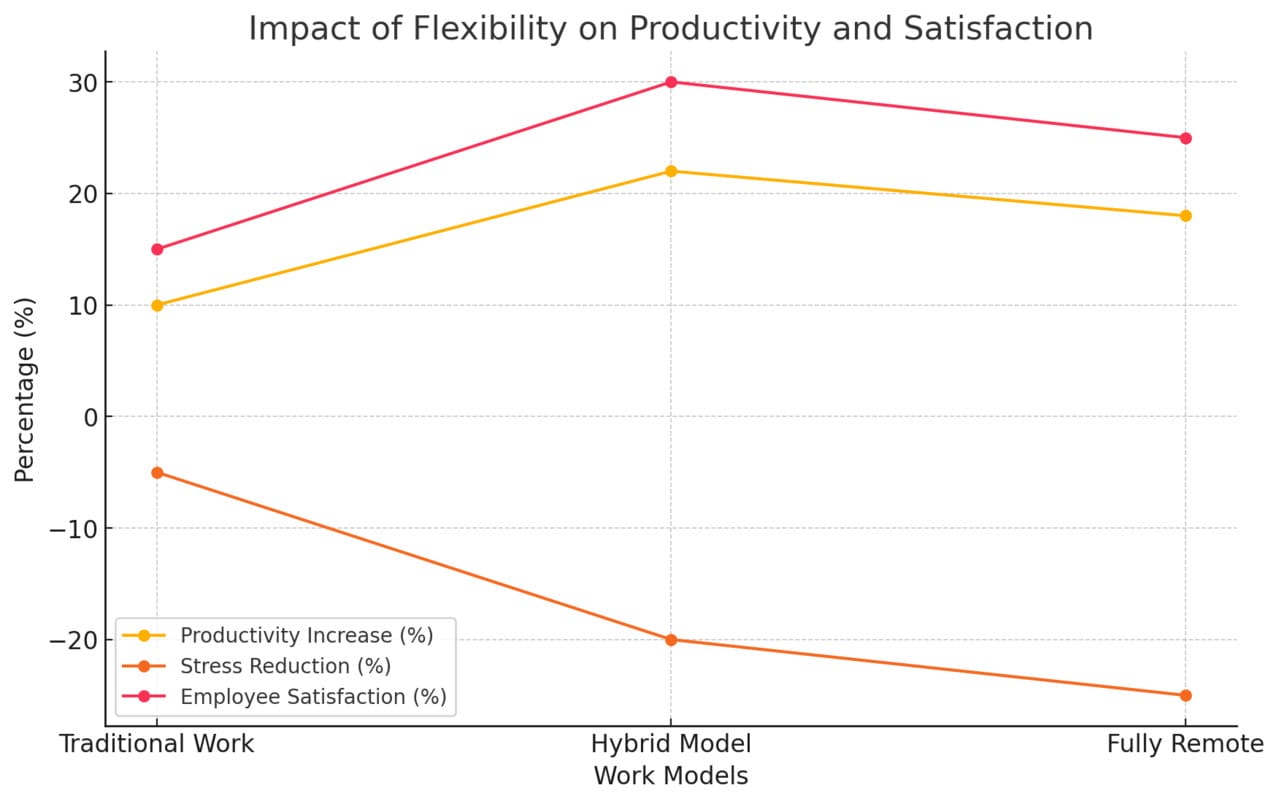
Companies that embrace flexibility report a 22% increase in productivity (Deloitte, 2023). The key driver? Allowing employees to align their work schedules with their natural productivity peaks. At KONE, introducing hybrid work schedules reduced overtime by 30%, leading to improved project completion rates.
2. Access to Global Talent
Flexibility erases geographical barriers in hiring. GitLab operates entirely remotely, employing talent from over 65 countries. Their public handbook, detailing every aspect of their processes, sets a benchmark for transparency and autonomy.
3. Cost Reduction
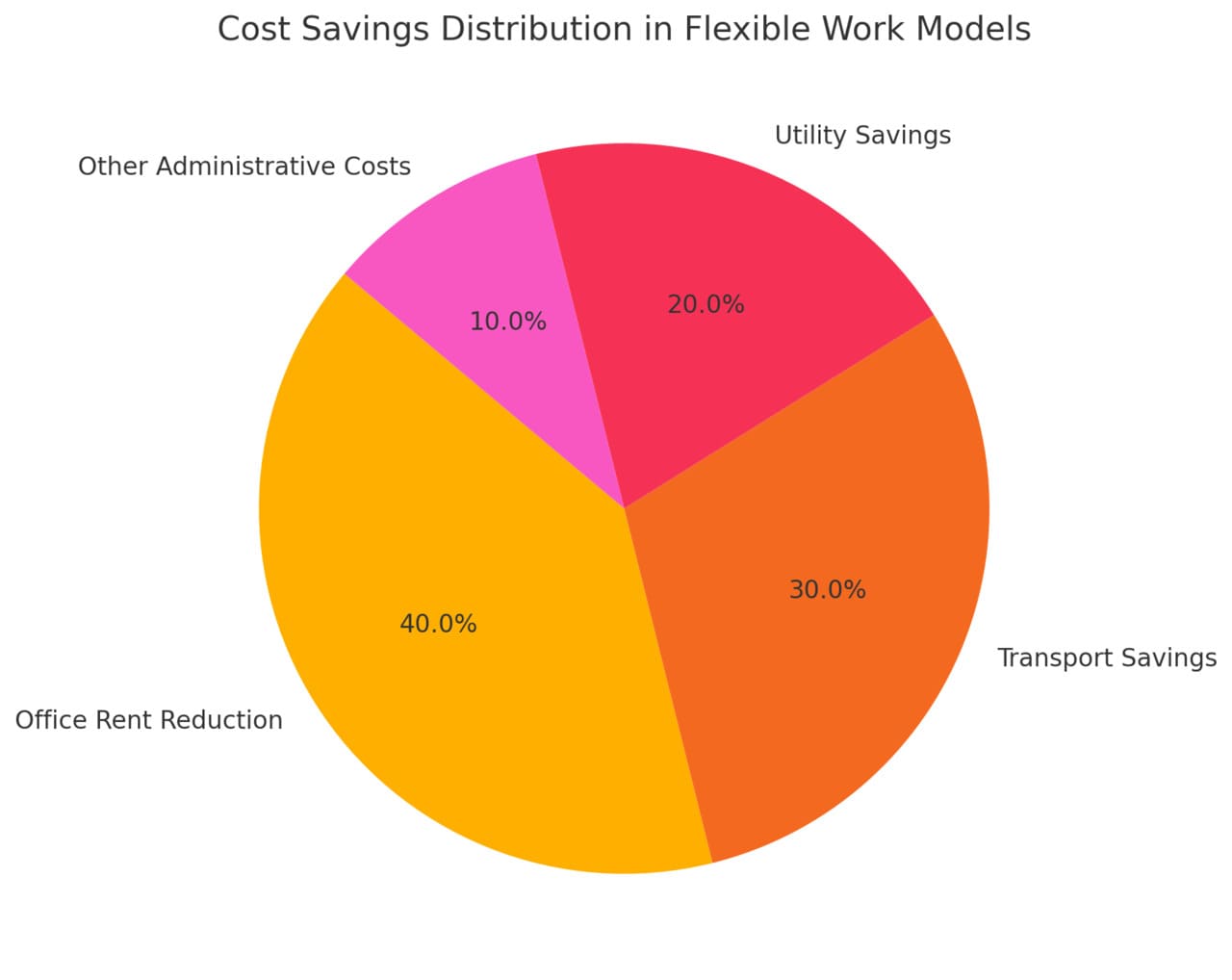
Remote work slashes expenses for office spaces, transportation, and energy. At Nordea, shifting to a hybrid model enabled a 30% reduction in office space while maintaining high productivity levels.
4. Environmental Impact
Flexibility aligns with ESG goals, reducing carbon footprints. Companies adopting hybrid work models cut CO₂ emissions by 3.6 million tons annually (PwC, 2023).
Challenges of Flexibility: Where It Gets Complicated
1. How to Measure Productivity
Traditional KPIs often fail in flexible environments. GitLab tackled this by focusing on metrics tied to project outcomes rather than hours worked.
2. Risks of Employee Isolation
Remote employees frequently report feeling disconnected from their teams. At KONE, managers address this by conducting regular one-on-one meetings to maintain engagement and strengthen emotional bonds.
3. Technological Threats
With remote work comes increased cybersecurity risks. IBM reported a 37% rise in cyberattacks on remote teams. Companies are responding with multi-factor authentication and regular employee training.
Lessons from Flexibility Leaders
KONE: Health as a Strategy
KONE implemented “Elevate Your Health,” a program aimed at promoting physical, emotional, and social well-being. This initiative is a cornerstone of the company’s strategy, reducing turnover by 15% and increasing employee satisfaction by 22%.
Nordea: The Office of the Future
Nordea reimagined its office spaces as collaboration hubs rather than traditional workstations. This helped employees better adapt to the hybrid model and improved team engagement.
GitLab: Success Through Asynchronous Work
GitLab has mastered asynchronous communication, eliminating the need for constant meetings. Their public handbook has become a foundation for onboarding and process management.
Strategies for Implementing Flexibility
- Focus on Outcome-Based Metrics
Shift from tracking hours to evaluating results through individual and project-based KPIs. - Invest in Employee Well-Being
Regular mental health programs can help prevent burnout and maintain morale. - Redefine Office Spaces
Transition offices into spaces designed for collaboration, learning, and innovation. - Develop Leadership Skills
Train leaders to be mentors and facilitators, not just overseers. - Embed Flexibility into Culture
Ensure flexibility is not a temporary solution but a core element of your organizational DNA.
Expert Opinion
Natalia Illarionova, Founder of AlbiCoins, shares:
“Flexibility demands that companies be willing to experiment. It’s more than just changing where work happens—it’s a chance to rethink organizational goals and priorities. Those who embed flexibility into their identity will not only be resilient but also highly attractive to top talent.”
Conclusion: Flexibility as a Growth Strategy
Flexibility at work is no longer just a new trend—it’s a powerful tool that is reshaping business norms. Companies that integrate flexible models while addressing cultural, technological, and social factors strengthen their market position, attract top talent, and enhance resilience. The lessons from leaders like KONE, Nordea, and GitLab prove that flexibility works best when it becomes a fundamental part of a company’s overall strategy.
References
- Flexible Work Arrangements: A Definition and Examples by Allen, T. D., Golden, T. D., & Shockley, K. M. (2015). Annual Review of Organizational Psychology and Organizational Behavior, 2(1), 345-367.
- The Impact of Flexible Working Hours on Work-Life Balance by Kelliher, C., & Anderson, D. (2010). Human Resource Management, 49(2), 151-177.
- Flexible Work Arrangements and Employee Performance: A Systematic Review by De Menezes, L. M., & Kelliher, C. (2011). Human Resource Management Review, 21(4), 261-272.
- The Effects of Flexible Work Practices on Employee Attitudes: Evidence from a Large-Scale Panel Study in Germanyby Beckmann, M., Cornelissen, T., & Kräkel, M. (2017). ILR Review, 70(5), 1037-1063.
- Flexible Work Arrangements and Work-Family Conflict: A Meta-Analysis by Allen, T. D., Johnson, R. C., Kiburz, K. M., & Shockley, K. M. (2013). Journal of Applied Psychology, 98(2), 345-357.
- The Role of Flexible Work Arrangements in Enhancing Employee Performanceby Bal, P. M., & De Lange, A. H. (2015). Human Resource Management Journal, 25(4), 464-482.
- Flexible Working and Performance: A Systematic Review of the Evidence for a Business Case by de Menezes, L. M., & Kelliher, C. (2011). International Journal of Management Reviews, 13(4), 452-474.
- The Impact of Telework on Organizational and Individual Performance by Gajendran, R. S., & Harrison, D. A. (2007). Journal of Applied Psychology, 92(6), 1524-1541.
- Flexible Work Arrangements and Organizational Culture: A Systematic Review by Thompson, C. A., Beauvais, L. L., & Lyness, K. S. (1999). Journal of Occupational Health Psychology, 4(1), 1-23.
- The Effects of Flexible Work Arrangements on Job Satisfaction and Turnover Intentions by McNall, L. A., Masuda, A. D., & Nicklin, J. M. (2010). Journal of Management, 36(6), 1450-1476.