

Not Just an Expense: How to Turn Corporate Culture into a Profit Driver. A Step-by-Step Framework for CEOs
- Step 1: Build the Foundation – A Unified Motivation Economy
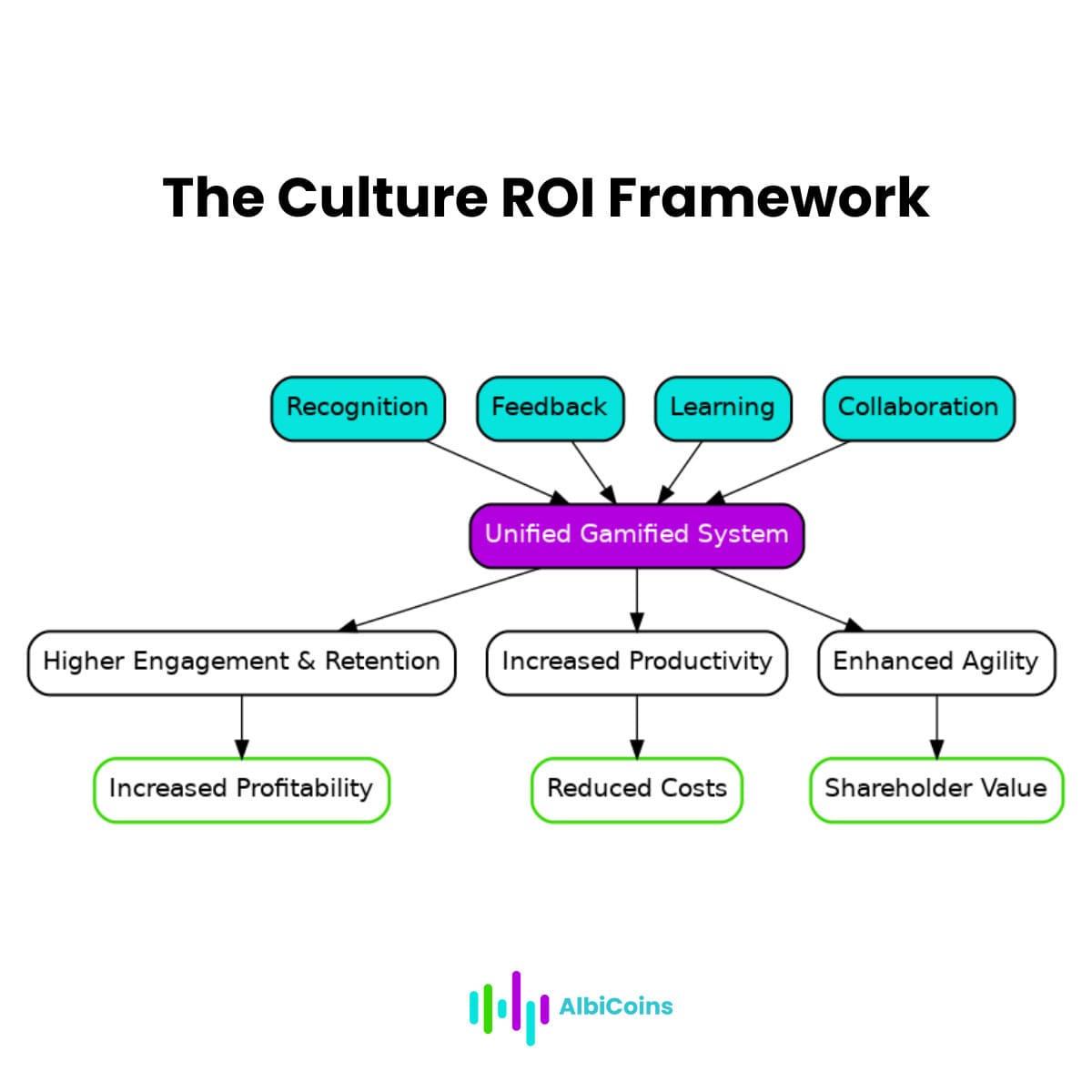
- Step 2: Implement the Three Key Growth Drivers on This Foundation
- Step 3: From Framework to Reality – The Role of Technology
- Conclusion: From Data to Action
In most boardrooms, “corporate culture” is still considered a “soft” topic—difficult to measure and even harder to link to financial results. This is a dangerous misconception. Data from leading global analytics firms like Gallup and McKinsey proves the opposite: culture is not an expense item, but one of the most powerful, yet often ignored, levers for influencing profitability and productivity.
The scale of the problem is staggering. According to Gallup, only 23% of employees worldwide are truly engaged in their work. This means the vast majority of your workforce is not performing at its full potential, creating not just operational, but direct financial losses. The question is no longer “is culture important?” but rather, “how much money are we losing by not managing it systemically?”. The answer is millions. The good news: this process can and should be managed.
Step 1: Build the Foundation – A Unified Motivation Economy
The primary problem with old approaches is fragmentation. Sales bonuses, recognition for values, and learning rewards all exist in different systems and fail to create a cumulative sense of value.
The modern approach is to create a single, gamified ecosystem. Imagine every positive employee action is rewarded with a universal internal “currency” that accumulates over time. This currency can be exchanged for benefits that are meaningful to employees—from an extra day off to paying for training—making the value of every contribution visible and personal.
This gamified approach is especially effective for engaging younger audiences (Gen Z) and blue-collar staff, for whom traditional annual KPIs are less relevant.
Step 2: Implement the Three Key Growth Drivers on This Foundation
Once you have a unified currency, you can systematically encourage three types of behavior that directly impact financial performance.
-
Systematize Recognition to Mitigate Financial Risk.
- The Business Logic: Talent retention is not an HR metric; it’s a risk management strategy. The loss of a key employee represents a direct financial drain, costing up to 200% of their annual salary to replace.
- The Action: Implement a process where any employee can instantly thank a colleague, linking that recognition to a specific corporate value.
- The Measurable Result: This approach directly addresses the primary reason for attrition. Employees who feel valued are 65% less likely to actively look for a new job.
-
Accelerate Feedback and Collaboration to Boost Operational Efficiency.
- The Business Logic: Speed is a key competitive advantage. Slow feedback cycles and departmental silos directly hinder time-to-market and strategy execution.
- The Action: Replace outdated annual reviews with tools for continuous, real-time feedback. Use team-based contests to stimulate cross-functional collaboration.
- The Measurable Result: This delivers an immediate boost to operational efficiency. Continuous feedback increases performance by 14.9%, while improved collaboration drives a productivity increase of up to 30%.
-
Incentivize Continuous Learning to Build an Agile Workforce.
- The Business Logic: In a constantly changing market, the ability to adapt and acquire new skills is essential for survival. Companies that grow talent internally are more resilient.
- The Action: Reward every step of employee development—from completing a course to passing a test. Turn learning from a duty into a valued habit.
- The Measurable Result: This directly impacts the bottom line. Companies with a strong learning culture report a 24% increase in profitability.
Step 3: From Framework to Reality – The Role of Technology
This framework—built on a unified economy and three growth drivers—is not just theoretical. Pioneering technology platforms, such as AlbiCoins, are built precisely around this philosophy. They provide the ready-made digital infrastructure to turn these strategic goals into daily, measurable actions.
A key element of such platforms is analytics. The ability to “measure the intangible”—tracking team dynamics and the popularity of corporate values—transforms culture management from an intuitive process into a data-driven discipline. Furthermore, advanced systems use AI to analyze the sentiment of communications, which allows for the identification of burnout risks and hidden problems even before they appear in reports.
Conclusion: From Data to Action
The data clearly shows that managing culture is no longer an “art” but a precise, measurable discipline. To ignore the financial consequences of low engagement is to voluntarily cede the market to competitors who have already learned how to manage it.
Modern tools make it possible to measure and develop culture systemically, transforming it from a cost center into one of the most high-yield profit centers. The key question for every leader today is: what framework are you using to turn your greatest asset—your people—into a measurable competitive advantage?
To explore how a unified gamified framework can transform your company’s culture into a measurable financial asset, you can find more information and practical examples here:
https://albimarketing.com/employee-tech/
References:
- The effect of employee recognition, pay, and benefits on job satisfaction: a meta-analytic review – A 2018 study in the Journal of Business and Psychology analyzing the strong correlation between recognition and job satisfaction, a precursor to retention.
- Gamification and the impact of extrinsic motivation on intrinsic motivation: A survey study – A master’s thesis from the KTH Royal Institute of Technology, Stockholm, exploring the mechanics of gamification in motivating behavior.
- Team-Based Digital Communication and Its Impact on Team Performance and Job Satisfaction – A 2023 study in the journal Sustainability that quantifies the link between digital collaboration tools and team performance.
- Continuous feedback and its role in improving employee performance: A case of a Finnish public sector organization – A 2023 study in the Journal of Managerial Psychology detailing the positive effects of continuous feedback in a Nordic context.
- Organizational Culture and Firm Profitability: An Unsettled Debate? – A paper from the International Journal of Advanced Research that reviews the academic literature linking specific cultural attributes to profitability.